

How a Digital Print Specialist Became a Celebrity Favorite
Time:
1775113243
Viewed:
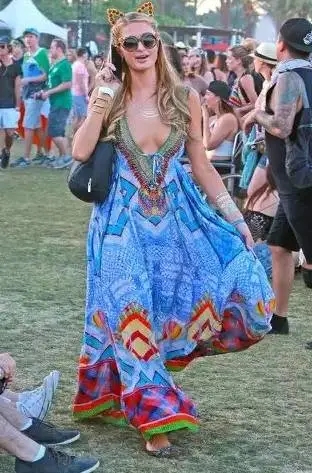
While airport terminals have long been unofficial runways for the style set, coastlines from Mykonos to Malibu have emerged as their competitive arena—bikinis and resort wear becoming the armor of choice for displaying hard-earned physiques. What many fashion observers don't realize is that a significant portion of the beachwear gracing celebrities like Paris Hilton, Beyoncé, and Australian influencer Natasha Oakley originates from a single digital printing specialist in Manchester's historic textile district.
The Evolution: From Activewear Foundation to Digital Innovation This company didn't begin as a high-end custom house. Founded in 2006 as an activewear manufacturer, it built its reputation on technical performance garments. At its peak, over half the products for Lorna Jane, the dominant force in Australian activewear, were produced in this very facility.
Today, activewear still represents 80% of the business—but it's the remaining 20% that tells the story of transformation. From monthly orders of 4,000 units in its early days, the operation now handles 400,000 pieces monthly, with staff growing from 30 to 1,500. But numbers alone don't capture what makes this company extraordinary.
The Secret Sauce: Where Investment Meets Artisanship
According to the company's leadership, the secret lies in an obsessive commitment to fabric innovation and technical precision. "Of our 1,500 employees, only 600 are on the production line," explains the managing director. "The rest work in design, development, and technical roles."This inverted structure—where development talent outpaces production labor—reflects a deliberate strategy. A PhD-led textile development team drives fabric innovation, while substantial capital flows into advanced equipment. When major activewear brands entered the market without understanding that performance fabrics demand entirely different engineering than fashion textiles, they turned to this Manchester specialist for complete solutions: design, development, fabric selection, and production.
This expertise attracted attention from the private luxury market. Consider the Paris Hilton beach cover-up: constructed entirely from silk, requiring eight meters of fabric with a seamless, continuous pattern. Traditional printing couldn't achieve this—it demanded direct-to-garment digital printing technology capable of spraying designs directly onto the fabric with no registration marks, no templates, and significant material waste. Most manufacturers declined such orders. The quantities were minuscule—perhaps twenty pieces per design—making per-unit costs prohibitive.
The Digital Pivot: Bringing Technology In-House
Rather than refuse, the company invested. Initially sending prepared fabric to Japan for printing created unsustainable lead times. The solution was bringing digital direct-to-garment capability in-house—a costly proposition. Even Chinese-manufactured DTG printers command prices exceeding £80,000 per unit . This facility now operates four such machines, each calibrated for different fabric types .But digital printing tells only part of the story. These resort pieces incorporate significant hand-finishing: hand-applied crystal embellishments, handwoven elements, and hand-stitched knots—craftsmanship requiring a specially recruited and trained artisan workforce . Higher costs, certainly. But for clients seeking exclusivity and provenance, the value proposition becomes irresistible. The garments transcend commodity status, becoming wearable art with corresponding margins.
The Numbers Behind the Glamour
Paris Hilton's beach cover-up retails above $1,000 (£800+). Beyoncé's shorter version commands £500-600. Natasha Oakley's bikini exceeds £300. These aren't mass-market price points—they're luxury investments, validated by the visibility of celebrity clientele.Beyond Resort Wear: Strategic Partnerships
The company's technical and creative capabilities attracted broader collaboration. The Ed Hardy Skinwear line—a venture between Canto-pop icon Carina Lau and Nick Wu—is produced here, following the same formula: small-batch production, variety-rich collections, and uncompromising quality targeting fashion-forward consumers .The Industry Lesson: Why This Model Works
This Manchester success story illustrates several principles reshaping global apparel manufacturing:First, the death of "one-size-fits-all" production. Traditional manufacturing optimized for massive runs of identical items. Digital printing enables "minimum viable batches"—fashion houses can test concepts with twenty units rather than two thousand .
Second, the premiumisation of craft. As automation proliferates, hand-finishing becomes more valuable, not less. The combination of cutting-edge digital technology and traditional artisanship creates differentiation impossible to replicate purely mechanically .
Third, the value of vertical integration. Controlling the entire chain—from PhD-level fabric development through digital printing to hand-finishing—allows responsiveness that intermediaries cannot match .
Finally, celebrity as validation, not strategy. This company doesn't pay for endorsements. Its clients—from global pop stars to fashion influencers—choose the product because it delivers something genuinely exceptional. The Instagram visibility follows naturally.
For digital textile printers and garment manufacturers navigating today's disrupted landscape, this Manchester story offers a compelling roadmap: invest in technical expertise, embrace the costs of true customization, preserve hand craftsmanship alongside digital efficiency, and let the quality speak for itself—even when it speaks from a Malibu beach towel at a thousand dollars a piece.